

Long before probiotics became a wellness trend, Indian kitchens were already quietly supporting gut health.
From fluffy idlis at breakfast to a glass of traditional buttermilk after lunch, many Indian foods rely on fermentation, a natural process that has been used for centuries. What our grandparents considered normal eating habits are now being studied for their role in digestive health, gut bacteria balance, immunity, and even metabolism.
In fact, researchers estimate that nearly 70% of the immune system is connected to the gut. When digestion is functioning well, the body absorbs nutrients more efficiently, experiences less bloating, and often feels more energetic throughout the day.
The challenge is that modern eating habits often contain fewer naturally fermented foods and more ultra-processed options that may negatively affect gut health over time.
The good news? Some of the best digestive-supporting foods are already part of traditional Indian cuisine.
In this article, we’ll explore how fermentation works, which Indian fermented foods offer the greatest digestive benefits, and how to include them in a healthy lifestyle.
How Does Fermentation Support Better Digestion Inside the Body?
Fermentation is a natural process where beneficial microorganisms such as bacteria and yeast break down carbohydrates and sugars in food. While this may sound technical, the result is surprisingly simple: food often becomes easier for the body to digest.
During fermentation, these microorganisms partially “pre-digest” certain nutrients. This can improve nutrient availability and reduce the digestive burden on the stomach and intestines.
Some important digestive benefits include:
- Improved gut microbial diversity
- Better nutrient absorption
- Easier digestion of carbohydrates
- Reduced bloating in some individuals
- Support for healthy bowel movements
- Enhanced production of beneficial compounds
Research has shown that fermented foods may help increase beneficial gut bacteria while supporting a healthier digestive environment.
A healthier gut may also influence:
- Energy levels
- Appetite regulation
- Immune function
- Metabolic health
- Inflammation levels
This doesn’t mean fermented foods are a magic solution, but they can be a valuable part of a balanced eating pattern that supports long-term digestive wellness.
Digestive health starts with daily food choices. Fitelo’s nutrition experts help you build balanced meal plans that naturally support gut health, digestion, and sustainable weight management.
10 Fermented Indian Foods That Are Excellent for Digestion
Traditional Indian cuisine offers several naturally fermented foods that can support digestive health.
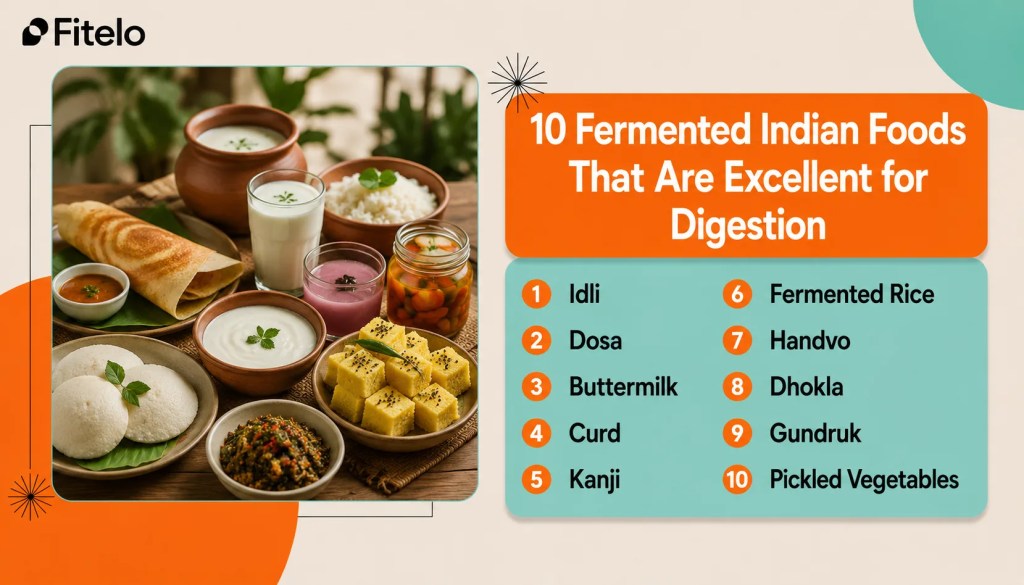
1. Idli
The fermentation of rice and urad dal batter increases nutrient availability and makes idlis easier to digest than many processed breakfast options.
2. Dosa
Fermented dosa batter contains beneficial bacteria and creates a light, easily digestible meal when paired with protein-rich accompaniments.
3. Buttermilk
One of India’s most popular digestive beverages, chaas provides beneficial bacteria and helps many people feel lighter after meals.
4. Curd
Fresh homemade curd contains live cultures that may support gut microbial balance and digestive comfort.
5. Kanji
This traditional fermented drink made from carrots or beetroot contains naturally occurring probiotics and digestive-supporting compounds.
6. Fermented Rice
Common in parts of South India, overnight fermented rice contains beneficial bacteria and may support digestive function.
7. Handvo
This Gujarati fermented dish combines lentils and rice, offering both probiotics and fiber.
8. Dhokla
Its fermentation process improves digestibility while providing protein and complex carbohydrates.
9. Gundruk
Popular in Himalayan regions, this fermented leafy vegetable preparation supports gut diversity.
10. Pickled Vegetables
Naturally fermented pickles contain beneficial bacteria and organic acids that may support digestion.
The biggest advantage of these foods is that they combine probiotics with whole-food nutrition rather than relying solely on supplements.
Small dietary changes often create the biggest long-term improvements. Fitelo helps you identify gut-friendly foods that fit your culture, lifestyle, and health goals.
Why Your Gut Microbiome Loves Fermented Foods?
Your digestive system contains trillions of microorganisms collectively known as the gut microbiome.
Scientists now recognize that gut health affects much more than digestion alone.
A healthy microbiome may influence:
- Nutrient absorption
- Appetite regulation
- Immune defense
- Blood sugar balance
- Mood and mental well-being
- Inflammation control
Modern diets often contain excessive amounts of processed foods and insufficient fiber, both of which can reduce microbial diversity.
Fermented foods help introduce beneficial microbes and create compounds that support existing healthy bacteria.
Studies have found that regular fermented food consumption may increase microbial diversity, which is generally considered a marker of good gut health.
However, fermented foods work best when combined with:
- Adequate dietary fiber
- Fruits and vegetables
- Whole grains
- Sufficient hydration
- Physical activity
Think of probiotics as the helpful bacteria and fiber as their preferred food source. Both are important for a healthy digestive system.
At Fitelo, we don’t focus on quick fixes. Our nutrition experts help you build a gut-friendly eating pattern that supports digestion, metabolism, and long-term wellness.
Are You Eating Fermented Foods Correctly? Common Mistakes to Avoid
While fermented foods can support digestion, many people unknowingly make mistakes that reduce their benefits.
Mistake 1: Choosing Highly Processed Versions
Many packaged products contain added sugar, preservatives, or minimal live cultures.
Mistake 2: Ignoring Fiber Intake
Beneficial bacteria need fiber to thrive. Fermented foods alone are not enough.
Mistake 3: Eating Too Much Too Quickly
Suddenly increasing fermented foods may cause temporary bloating in some individuals.
Mistake 4: Depending Only on Supplements
Whole-food fermented sources often provide additional nutrients beyond probiotics.
Mistake 5: Neglecting Overall Diet Quality
Poor eating habits cannot be fully offset by adding one healthy food.
The most effective approach is combining fermented foods with balanced nutrition, regular meals, hydration, sleep, and physical activity.
Digestive health is rarely built through a single superfood. It develops through consistent daily habits.
Better digestion starts with a healthier eating pattern, not restrictions. Fitelo creates personalized nutrition plans that help improve digestion while supporting healthy and sustainable weight loss.
A Word From Fitelo
Sometimes the best health solutions are the ones that have been sitting in our kitchens all along.
Fermented Indian foods have supported digestion for generations, long before gut health became a global wellness trend. Foods like idli, dosa, curd, chaas, kanji, and traditional fermented vegetables offer a natural way to support beneficial gut bacteria, improve nutrient absorption, and promote digestive comfort.
But gut health isn’t about adding one probiotic food and expecting miracles. It works best when fermented foods become part of a balanced lifestyle that includes fiber-rich meals, proper hydration, regular movement, and consistent eating habits.
The goal isn’t simply to reduce bloating or improve digestion for a few days. The goal is to create a healthier digestive system that supports your energy, metabolism, immunity, and overall well-being for years to come.
When you nourish your gut consistently, your entire body often benefits.
Frequently Asked Questions
Which Fermented Indian Food Is Best For Digestion?
Curd, chaas, idli, dosa, and kanji are among the most commonly consumed fermented Indian foods that may support gut health and improve digestive comfort when included regularly.
Can Fermented Foods Reduce Bloating?
For many people, fermented foods may help improve digestion and support healthy gut bacteria. However, individuals with certain digestive conditions may need to introduce them gradually.
How Often Should I Eat Fermented Foods?
Including one to two servings of naturally fermented foods daily can be a simple way to support gut health as part of a balanced diet.
Are Fermented Foods Good For Weight Loss?
Fermented foods may support digestion, appetite regulation, and overall dietary quality, which can indirectly support healthy and sustainable weight management.
Is Curd Considered A Fermented Food?
Yes. Curd is produced through fermentation and contains beneficial bacteria that may help support digestive health and gut microbial balance.


Join the conversation
No comments yet — be the first to share your thoughts.