

The hardest part about weight loss is supposed to be controlling hunger.
But for many people using modern weight loss medications, the bigger challenge becomes something completely unexpected: feeling constantly unwell.
One day, you’re excited because cravings are finally quieter. A few weeks later, you’re dealing with nausea after meals, low energy, bloating, headaches, or feeling too exhausted to exercise properly.
This can feel confusing because eating less is often seen as “healthy.” But the body still needs enough fuel, hydration, protein, vitamins, and nutrients to function normally, even during fat loss.
When appetite drops too quickly, nutrition often drops with it. Over time, that imbalance can affect digestion, metabolism, muscle health, and overall energy levels.
That’s why sustainable weight loss is not just about reducing calories. It’s about helping the body adapt safely while still feeling strong, nourished, and healthy throughout the journey.
Why Your Body Starts Struggling During Rapid Weight Loss?
One of the biggest misconceptions about weight loss medication is that eating less automatically means getting healthier.
But the body doesn’t just need fewer calories. It still needs enough nutrition to maintain energy, digestion, hormones, metabolism, and muscle strength.
This is where many people unknowingly run into trouble.
As appetite drops, food intake often becomes too low too quickly. Meals become smaller, protein intake decreases, hydration drops, and important nutrients slowly become inadequate. At first, the scale moves quickly. But internally, the body may start struggling to keep up.
This is why symptoms like:
- Constant fatigue
- Dizziness
- Brain fog
- Weakness during workouts
- Low stamina
- Poor recovery
- Feeling drained throughout the day
It becomes surprisingly common during aggressive weight loss.
Protein is one of the biggest concerns. Research shows that rapid weight loss without enough protein increases the risk of losing lean muscle mass along with fat. Muscle plays a major role in metabolism, strength, posture, recovery, and blood sugar stability.
When muscle loss happens alongside calorie restriction, energy levels often fall even further.
Another overlooked issue is electrolyte imbalance. Eating less food usually means consuming less sodium, potassium, and magnesium, which can contribute to weakness, headaches, and fatigue.
The body may be losing weight, but it may also be running low on the fuel it needs to function properly.
Fitelo focuses on sustainable fat loss through balanced nutrition, protein-rich meals, and healthier eating habits that help support your energy, strength, and metabolism during weight loss.
Why Digestive Symptoms Often Get Worse Instead of Better
Many people expect reduced appetite during weight loss medication.
What they don’t expect is how uncomfortable digestion can sometimes become.
One reason this happens is that GLP-1 medications slow gastric emptying, meaning food stays in the stomach longer before moving through the digestive system. This helps increase fullness, but it can also create digestive discomfort if eating patterns are not adjusted properly.
People commonly experience:
- Nausea after meals
- Bloating
- Acid reflux
- Constipation
- Stomach heaviness
- Feeling “too full” very quickly
Research shows gastrointestinal symptoms are among the most frequently reported side effects during GLP-1 treatment, especially during the early stages.
But the medication itself is not always the only problem.
Digestive symptoms often worsen because people unintentionally:
- Drink less water
- Eat too little fiber
- Skip meals
- Eat highly restrictive diets
- Avoid balanced nutrition
Fiber plays an important role in bowel health and digestion, yet many people drastically reduce fiber intake while trying to “eat lighter.”
Hydration also becomes critical because slower digestion, combined with low water intake, may worsen constipation and bloating significantly.
The gut needs nourishment to function properly. When the body receives too little food, digestion may become sluggish instead of healthier.
This is why successful weight loss should never focus only on suppressing appetite. It should also support digestion, hydration, and gut health throughout the process.
Fitelo helps create balanced, gut-friendly meal plans that support digestion, hydration, and sustainable fat loss, helping you feel lighter without constantly feeling uncomfortable.
The Emotional and Mental Side Effects Nobody Talks About
Physical symptoms are only one part of the story.
For many people, rapid weight loss also affects mood, motivation, and emotional well-being in ways they didn’t expect.
When food intake changes drastically, the brain can feel the impact too.
The body relies on consistent nutrition for:
- Stable energy
- Hormone production
- Brain function
- Mood regulation
- Stress management
Low-calorie intake over long periods may contribute to:
- Irritability
- Mood swings
- Anxiety around eating
- Mental fatigue
- Difficulty concentrating
- Feeling emotionally drained
Some people also develop fear around eating because nausea or digestive discomfort becomes associated with meals. Over time, eating starts feeling stressful instead of enjoyable.
Another important factor is blood sugar instability. Long gaps between meals or extremely restrictive eating can lead to energy crashes that affect both mood and cravings.
Research increasingly shows that mental well-being and metabolism are deeply connected. Chronic stress and poor recovery may influence hunger hormones, cravings, sleep quality, and fat storage patterns.
This is why healthy weight loss should feel supportive, not punishing.
The most sustainable transformations happen when people improve their relationship with food instead of constantly battling against their body.
Fitelo focuses on realistic eating habits and long-term lifestyle support that help make weight loss feel healthier, more balanced, and easier to maintain emotionally and physically.
What Healthy Weight Loss Should Actually Look Like?
Healthy weight loss is not supposed to leave you exhausted, weak, nauseous, or afraid of food.
The goal should never be to simply eat the least amount possible. The goal is to help the body lose fat while still protecting:
- Muscle mass
- Energy levels
- Hormone balance
- Digestion
- Mental well-being
- Metabolic health
Research consistently shows that gradual, sustainable fat loss tends to produce better long-term outcomes than aggressive restriction.
Some of the most important ways to support the body during weight loss include:
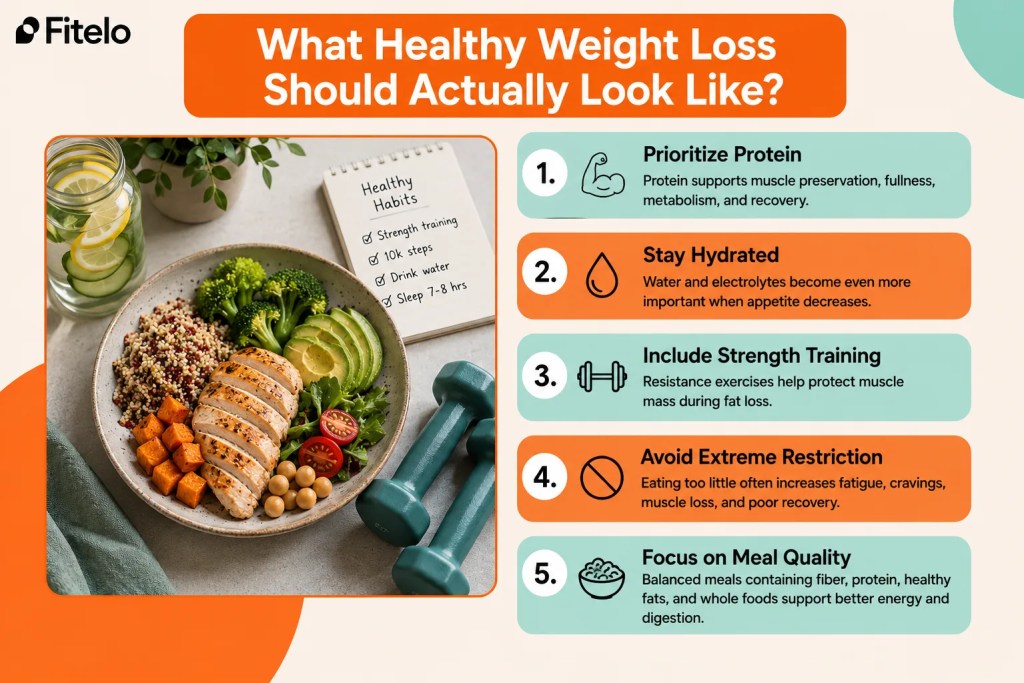
1. Prioritize Protein
Protein supports muscle preservation, fullness, metabolism, and recovery.
2. Stay Hydrated
Water and electrolytes become even more important when appetite decreases.
3. Include Strength Training
Resistance exercises help protect muscle mass during fat loss.
4. Avoid Extreme Restriction
Eating too little often increases fatigue, cravings, muscle loss, and poor recovery.
5. Focus on Meal Quality
Balanced meals containing fiber, protein, healthy fats, and whole foods support better energy and digestion.
The healthiest weight-loss approach is one that helps you feel stronger over time, not weaker.
Because real progress is not just about losing kilograms, it’s about improving how your body functions while losing weight.
Fitelo’s personalized diet plans and lifestyle coaching help you lose fat in a healthier, more sustainable way, without extreme restriction or constant exhaustion.
A Word From Fitelo
Weight loss medication may reduce appetite, but your body still needs proper nutrition, hydration, recovery, and balance to function well.
That’s why symptoms like fatigue, nausea, bloating, weakness, and low energy often appear when weight loss becomes too aggressive or nutritionally incomplete.
The good news is that these symptoms are not always unavoidable. In many cases, they improve when the body receives enough protein, better meal balance, hydration, and sustainable support throughout the journey.
Healthy weight loss should help you feel lighter, stronger, more energetic, and healthier, not physically drained while chasing results.
Because the best transformation is not the fastest one.
It’s the one your body can actually sustain long-term.
Frequently Asked Questions
Why Do People Feel Tired During Weight Loss Medication?
Fatigue often happens because appetite drops too quickly, leading to low calorie intake, dehydration, reduced protein intake, muscle loss, and nutrient deficiencies that affect the body’s energy production.
Why Does Digestion Feel Slower During Glp-1 Treatment?
GLP-1 medications slow stomach emptying to increase fullness. This may lead to nausea, bloating, constipation, acid reflux, or stomach heaviness in some people.
Can Rapid Weight Loss Affect Muscle Mass?
Yes. Losing weight too quickly without enough protein or strength training may increase muscle loss, which can reduce strength, metabolism, and long-term weight maintenance.
Is Nausea During Weight Loss Medication Normal?
Digestive symptoms like nausea are common, especially during the early stages. Eating smaller, balanced meals, staying hydrated, and avoiding extreme restriction may help reduce discomfort.
How Can I Lose Weight Without Feeling Weak?
Balanced nutrition, enough protein, hydration, gradual fat loss, strength training, and consistent meal patterns can help support energy, muscle health, and metabolism during weight loss.


Join the conversation
No comments yet — be the first to share your thoughts.