Roti vs Bread is a classic debate!
It’s breakfast time, and you’re standing in the kitchen, staring at the options—your trusty stack of rotis or that fresh loaf of bread. You ask yourself, “Which one’s the healthier choice today?” yup, we’ve all been there!
Roti has been a part of our lives for as long as we can remember. On the other hand, bread with its quick and easy appeal, seems like the modern day savior for busy mornings.
But when it comes to health, nutrition, and benefits, who wins the ultimate food face-off—roti or bread? Let’s get in and figure it out!


The Basics: What’s In A Roti? What’s In A Slice Of Bread?
If you’ve ever seen your mom or dadi roll out rotis in the kitchen, you know it’s as straightforward as it gets.
Roti
- A basic roti recipe is usually just whole wheat flour, water, and maybe a tiny dab of oil to make it soft. That’s it—no fuss, no frills.
- It’s mixed into a dough, rolled out, and cooked on a hot tava until it puffs up with that perfect characteristic.
Bread
Now, bread—well, that’s where things get a bit more complicated. Bread can be made from a variety of flours (white, whole wheat, multigrain), but there’s usually more to it.
- Refined Flour: Most commercial bread is made from refined flour, which has been stripped of its bran and germ, robbing it of essential nutrients and fiber. This means that the bread you’re consuming lacks the nutritional value of whole grains.
- Additives and Preservatives: Take a closer look at the ingredient list and you’ll likely find a parade of additives and preservatives, such as emulsifiers, dough conditioners, and stabilizers. These chemicals are added to prolong shelf life and enhance texture, but their impact on your health is questionable.
- High Sugar Content: Don’t let the seemingly plain exterior fool you. Many bread varieties, especially the so-called “healthy” ones, pack a surprising amount of added sugars. This not only contributes to empty calories but also wreaks havoc on blood sugar levels.
- Hidden Salt: Bread can be a sneaky source of sodium. Excessive salt intake is linked to high blood pressure and various health issues.
- Artificial Flavors: To mask the lack of nutrients in refined bread, artificial flavors are often added. This only distances your palate from the real taste of quality ingredients.
- Nutrient Loss: The refinement process strips away crucial nutrients, leaving you with a product that lacks the vitamins, minerals, and fiber found in whole grains.
- Digestive Woes: The absence of fiber can lead to digestive problems and constipation, which isn’t ideal for anyone seeking a healthy gut.
- Empty Calories: Perhaps the most damning aspect is that many commercial bread options offer little more than empty calories, devoid of the nourishment your body needs.
So, roti is as straightforward as it comes, usually just three ingredients, all fresh and natural. Bread, on the other hand, varies a lot—it can be wholesome and hearty or packed with extras, depending on the type you pick.
Comparing Nutrients: Roti Vs Bread
When it comes to choosing between traditional roti and bread, there are several factors to consider, including their nutritional content and overall impact on health. Here’s a comparison of nutrients between the two:
| ROTI | BREAD |
| Ingredients: Roti is traditionally made from whole wheat flour, containing the entire wheat kernel – bran, germ, and endosperm. | Varieties: Bread comes in diverse forms, from white to whole wheat to multigrain, each with different nutrient profiles. |
| Fiber Content: Whole wheat roti is notably rich in dietary fiber due to the presence of bran. This fiber aids digestion, prevents constipation, and promotes a feeling of fullness. | Fiber Content: Whole grain bread, especially those with visible grains, can provide a decent amount of fiber. However, refined white bread may lack significant fiber content due to processing. |
| Nutrient Density: Roti offers a range of essential nutrients such as B vitamins (B1, B2, B3, B6), iron, magnesium, and zinc. These nutrients contribute to energy production, immunity, and overall well-being. | Enrichment: Some bread, particularly white bread, may be enriched with certain nutrients after processing to replace lost nutrients. This process adds back some vitamins and minerals. |
| Low Glycemic Index: The glycemic index of roti made with whole wheat grain is low, meaning it causes a slower and steadier rise in blood sugar levels. This is beneficial for managing blood sugar and preventing energy crashes. | Processing: Refined bread, like white bread, undergoes processing that removes the bran and germ, reducing its fiber and nutrient content. |
| Gluten: Roti made from whole wheat flour contains gluten, which can be a concern for those with gluten sensitivities or celiac disease. | Gluten: Most bread, especially wheat-based varieties, contains gluten. Gluten-free bread made from alternative flour is an option for those with gluten intolerance. |
Things To Consider
Before choosing between roti vs bread, here are a few things that you should take into consideration:
- Nutrient Retention: Roti retains more nutrients due to the use of whole wheat flour, providing a comprehensive spectrum of vitamins and minerals.
- Fiber and Digestion: Whole wheat roti offers higher fiber content, promoting better digestion, and heart health, and aiding in weight management.
- Blood Sugar Control: Roti’s low glycemic index contributes to stable blood sugar levels, making it suitable for diabetes management.
- Individual Needs: Bread options cater to various dietary needs, including whole grain for fiber, enriched for added nutrients, and gluten-free for sensitivities.
- Processing Impact: The degree of processing significantly affects the nutritional value of bread. Choosing whole grain or whole wheat varieties is preferable.
The Great Debate: Roti Vs Bread – Which One Win?
The age-old battle between Roti vs. Bread continues, leaving many wondering which option holds the nutritional crown. Let’s get into the debate and uncover the winner.
| Roti | Bread |
| Whole Grains: Roti, a staple in many cuisines, is often made from whole wheat flour, retaining the goodness of the entire grain. This means you’re getting a dose of essential nutrients and fiber. | Refined Flour Woes: Many bread types are made from refined flour, deprived of its nutritional value. This can lead to an inadequate intake of essential nutrients. 1 slice of whole wheat bread (30 gm) may contain 70-80 calories |
| Simple Ingredients: Roti typically consists of just flour, water, and a pinch of salt. It’s free from the array of additives found in many commercial bread varieties. 1 roti calories may be around 70-80 calories whereas roti is around 40-50 gm. | Hidden Additives: Commercial bread often contains additives, preservatives, and even sugars to enhance shelf life and taste. In the long run, these may be harmful to health. |
| Nutrient-Rich: The use of whole wheat ensures that roti provides vitamins, minerals, and dietary fiber that aid digestion and contribute to overall well-being. | |
So, Winner Of The Debate Is ROTI
When it comes to the nutritional showdown, roti emerges as the winner. Its use of whole wheat flour ensures a higher nutrient content and fiber intake compared to many bread varieties. The simplicity of ingredients in roti is a testament to its wholesome nature.
So, the next time you’re debating between roti and bread, consider the nourishing benefits of roti and how it aligns with your health goals.
Why Choose Roti Over Bread?
When it comes to making healthy dietary choices, opting for Roti vs Bread can be a wise decision for several compelling reasons:
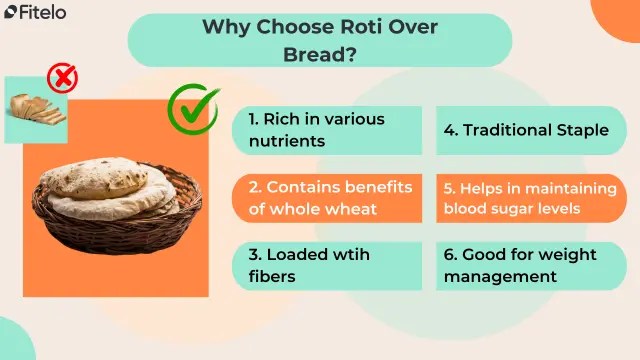
- Nutrient Treasure Trove: Roti offers an array of essential nutrients like B vitamins (thiamin, niacin, folate), iron, magnesium, and zinc. These nutrients are vital for energy production, immune function, and overall health. Roti’s are natural weight loss foods.
- Whole Wheat Wholesomeness: Roti, crafted from whole wheat flour, retains the complete grain, ensuring you benefit from its full nutritional profile. This inclusion comprises fiber, vitamins, and minerals that refined flour, used in making many types of bread, often loses.
- Fiber Powerhouse: The fiber content in roti is a standout feature. Whole wheat flour contains significantly more fiber compared to the refined flour often found in bread. This dietary fiber is a boon for digestion, blood sugar regulation, and providing a sense of sustained fullness after eating.
- Minimal Additives: Typically, homemade roti involves minimal additives and preservatives, ensuring you enjoy a more natural and wholesome product compared to some commercially available bread options.
- Cultural Richness: Roti holds profound cultural significance in various cuisines. Opting for this traditional staple not only nourishes your body but also connects you to your culinary heritage.
- Blood Sugar Management: The gradual digestion of whole wheat in roti leads to a gradual release of glucose into the bloodstream. This prevents the sudden spikes and crashes in blood sugar levels that can be associated with certain types of bread.
- Weight Management: The combination of fiber and nutrients in roti can contribute to a sense of satiety, potentially curbing overall calorie intake and aiding in weight management.
You can also read, the wheat bran roti recipe here!
Neeru Bajwa’s Diet & Fitness Tips: What I Eat In A Day
Discover Neeru Bajwa’s diet and fitness insights as she shares what she eats in a day. For a deeper look into her routine, watch the video below. Learn from her tips and techniques to enhance your own health and wellness journey.
Final Thoughts: Which One Should You Choose?
- Whole wheat bread vs. chapati which is better? At the end of the day, roti comes out strong, especially if you’re looking for something wholesome, filling, and rooted in tradition.
- With its high fiber, simple ingredients, and steady energy release, roti makes a great choice for anyone focused on nutrition and weight management.
- Plus, it pairs so well with veggies, dals, and curries, creating a balanced, satisfying meal.
- Bread does have its perks—mainly convenience and variety—but if you have the time and want to keep things as natural as possible, roti is a winner.
- So, next time you’re settling between roti vs bread, know that you can always lean on roti for that solid, reliable dose of goodness!
Mehak’s Inspiring Weight Loss Journey: A Mother’s Progress
Feeling like you’ve abandoned your health goals? It’s not too late! Get inspired by Mehak’s incredible weight loss journey—losing 34 kg and 15 inches in 6 months. Join Fitelo and start your own transformation today!
Frequently Asked Questions
Which Is Good Bread Vs Roti For Weight Loss?
Roti has an edge over bread for weight loss. It’s high in fiber, aids digestion, and keeps you full longer. Its low glycemic index helps control blood sugar. Many commercial breads, however, contain added sugars and refined flour, which can cause blood sugar spikes. Choose whole grain or whole wheat bread with minimal additives for a healthier option.
What Can I Eat Roti Or Bread In My Diet?
Both roti and bread can fit into your diet, but choose wisely. Go for whole wheat or multigrain versions for more nutrients and fiber. If weight loss is your goal, roti’s fiber and lower glycemic index may be better. For convenience, whole grain bread with minimal additives is a good alternative.
Is Bread A Good Replacement Over Roti?
Bread can replace roti, but the type matters. Whole grain or whole wheat bread with minimal additives offers similar nutrients and fiber. Avoid highly processed bread with added sugars and refined flour, as it’s less nutritious than roti made from whole wheat.
Roti Vs Bread Which Gives More Benefits?
Chapati for weight loss, especially made from whole wheat flour, often offers more fiber, vitamins, and minerals than many commercial breads. Its lower glycemic index and ability to promote fullness make it great for weight management and blood sugar control.
Is Roti Actually Better Than Bread?
Roti, especially made from whole wheat, offers benefits like higher fiber, a lower glycemic index, and better fullness, making it great for weight management and blood sugar control. However, some whole grain or whole wheat breads can provide similar benefits. Consider ingredients, processing, and your dietary needs when choosing between roti and bread.
Contact Us
Do you have any questions or any insights that you’d like to share? Please write us in the comment section below, we’d love to hear from you.
Moreover, if you are looking for a customized diet plan at home for better health or want to lose weight with cheat meals you can contact us today.
Our dietitians will discuss how we can help you achieve your health goals. Drop your queries here, and our team will be happy to help you. Let’s get healthier together!
Disclaimer
This blog post will help you make healthier and better health choices. So be aware and take care. The most important thing to consider is your health before starting any specific diet or routine. Always seek advice from a doctor or dietitian if you have any concerns before starting.
Eat Healthy, Live Healthy. Enjoy a long, happy life.

Idli also called rice cake, is arguably one of the…