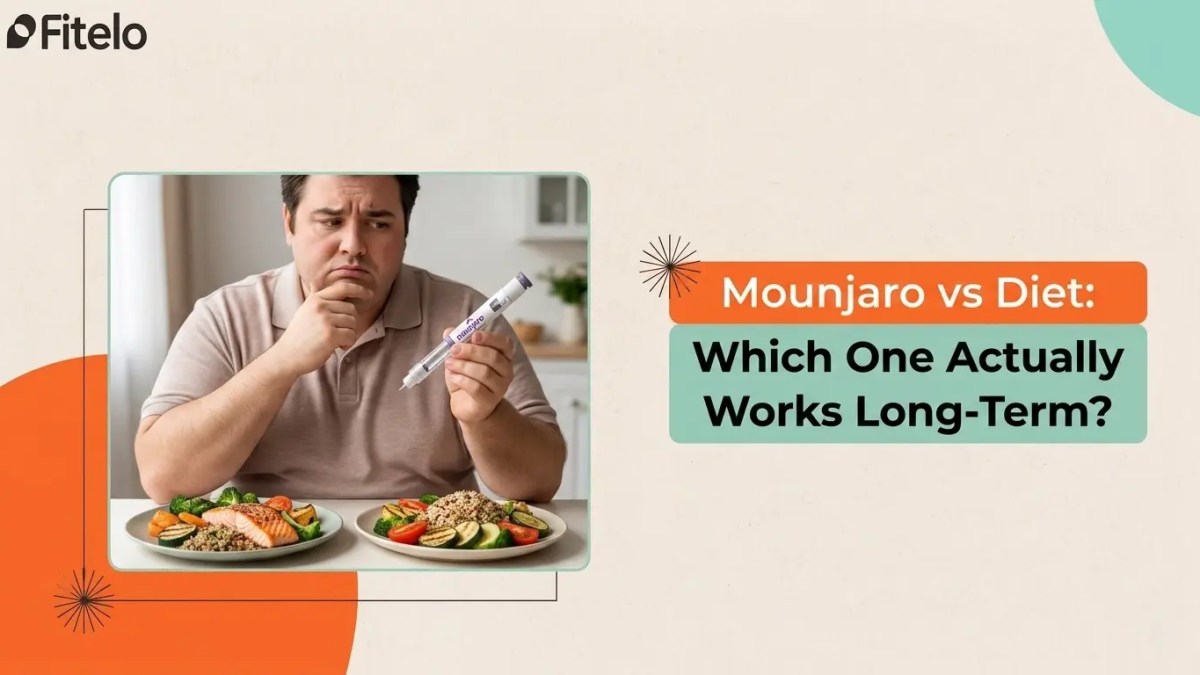

If you’ve been trying to lose weight, you’ve probably noticed a shift. Earlier, the advice was simple: eat better, move more, stay consistent. It was slow, required effort, and didn’t promise quick results, but it was built around long-term change.
Now, with medications like Mounjaro, the conversation has changed completely. People are losing 15–20% of their body weight in a relatively short time, often without strict dieting or constant hunger. That kind of result is hard to ignore, and naturally, it changes expectations around what weight loss should feel like.
So the question comes up: why struggle with diet when something faster exists?
But here’s the real issue. Fast weight loss and sustainable weight loss are not the same thing. What looks effective in the short term doesn’t always hold up over time, especially if the body, metabolism, and habits aren’t supported during the process.
To understand what truly works long-term, we need to look beyond just the results, and focus on what’s happening underneath.
Why Mounjaro Causes Rapid Weight Loss (And Why It Feels So Easy)?
The reason Mounjaro works so effectively comes down to how it interacts with your body’s hunger system.
It acts on hormones involved in appetite regulation, primarily through GLP-1 receptor agonist and GIP pathways. In simple terms, it changes how your body experiences hunger.
Here’s what most people notice within weeks:
- You feel full much faster
- You don’t think about food constantly
- Cravings, especially for sugar and processed foods drop significantly
- Portion sizes reduce without effort
This creates a natural calorie deficit without the mental struggle usually associated with dieting. That’s why the results are so strong.
Clinical trials show:
- Around 6–8% weight loss in the first 2–3 months
- Up to 20%+ weight loss over 12–18 months
For context, traditional dieting usually leads to 5–10% weight loss, often with much more effort.
But here’s the important detail: The weight loss is happening because your hunger is being externally controlled
You’re not necessarily learning how to eat differently, you’re simply feeling less driven to eat. And that distinction becomes critical later.
What Happens When You Stop Mounjaro (This Is Where Reality Kicks In)
Most people focus on the results while taking Mounjaro. But long-term success depends on what happens after you stop.
When the medication is discontinued:
- Appetite gradually returns
- Hunger hormones go back to baseline
- Your natural food drive comes back
And if eating habits haven’t changed during that time, something predictable happens: Weight regain
Studies on GLP-1–based medications show that many people regain a significant portion of lost weight within 6–12 months of stopping.
In some cases, it can be 50–80% of the weight lost. This isn’t because the medication “failed.”
It’s because: The underlying behavior remained the same Mounjaro helps reduce hunger, but it doesn’t teach:
- How to structure balanced meals
- How to handle emotional or stress eating
- How to maintain calorie control without support
So once the external control is gone, the body returns to familiar patterns. This is why many experts now view these medications as: Long-term treatments, not short-term fixes
Why Dieting Feels Hard (But Still Matters More Than You Think)
Now let’s talk about diet, but realistically. Dieting is often frustrating, and for good reason.
Most people approach it in ways that are:
- Too restrictive
- Too aggressive
- Too dependent on willpower
This leads to:
- Constant hunger
- Low energy
- Strong cravings
- Eventually giving up
That’s why studies often show that a large percentage of people regain weight after dieting. But here’s the part that gets overlooked: Dieting is the only approach that can become self-sustaining
When done correctly, it doesn’t rely on extreme restriction. Instead, it focuses on:
- Balanced meals (not elimination)
- Adequate protein intake
- Consistent meal timing
- Strength training to preserve muscle
This approach does something medication cannot: It builds internal regulation
You gradually learn:
- How much food your body actually needs
- How to stay full without overeating
- How to manage cravings without relying on suppression
And that’s what allows weight loss to last.
The Hidden Risk Behind Rapid Weight Loss: Muscle Loss, Metabolism & Why Results Don’t Last

Most people judge weight loss by one thing, the number on the scale.
But your body doesn’t just lose “weight.” It loses a combination of fat and lean mass (muscle). And this distinction is where long-term success is decided.
With medications like Mounjaro, appetite is significantly reduced through mechanisms like GLP-1 receptor agonist. This makes it easier to eat less, but it also creates a situation where nutrition becomes unstructured.
When calorie intake drops quickly without proper planning:
- Protein intake often becomes insufficient
- Strength training is usually missing
- Overall nutrient quality declines
As a result, the body doesn’t just burn fat, it also starts breaking down muscle.
This is a critical problem because muscle is directly linked to your metabolism. It determines how many calories your body burns at rest (your basal metabolic rate). The more muscle you have, the higher your daily energy expenditure—even when you’re not active.
So when muscle is lost during rapid weight loss:
- Your metabolism slows down
- Your calorie needs drop
- Your body becomes more efficient at storing fat
This creates a long-term disadvantage.
Now, when someone stops the medication:
- Hunger signals return
- Appetite increases
- Eating patterns often go back to normal
But here’s the catch: Your metabolism is now lower than before
So even if you eat the same way you used to, your body is more likely to regain weight and often faster.
To prevent this, weight loss needs to be managed, not just accelerated.
That means:
- Prioritizing adequate protein to preserve muscle
- Including resistance training to signal muscle retention
- Following a structured eating pattern instead of unintentional undereating
A Word From Fitelo
Medications like Mounjaro can make weight loss easier by reducing hunger and helping people achieve faster results.
But long-term success doesn’t depend on how quickly weight is lost. It depends on whether your body and habits can sustain those results after the initial phase.
Because:
- Appetite control can be temporary
- Medication may not be lifelong for everyone
- But your lifestyle is permanent
And if muscle loss, poor diet structure, and inconsistent habits are ignored during weight loss, the chances of regain increase, regardless of how effective the method was initially.
That’s why diet is not optional, it’s foundational. A structured, well-planned approach to nutrition ensures:
- Muscle is preserved
- Metabolism stays stable
- Eating patterns become sustainable
At Fitelo, the focus is exactly this, helping people not just lose weight, but build a system that supports long-term results without dependency.
Because ultimately: Weight loss doesn’t last unless your habits can support it
Frequently Asked Questions
Does Mounjaro Lead To Muscle Loss?
It can, especially if weight loss happens quickly without enough protein intake or strength training. Preserving muscle requires proper diet and resistance exercise.
Why Is Metabolism Affected During Weight Loss?
When muscle mass decreases, your body burns fewer calories at rest. This lowers your metabolic rate, making it easier to regain weight later.
Why Do People Regain Weight After Stopping Mounjaro?
Appetite returns, and if eating habits haven’t changed, calorie intake increases. Combined with a slower metabolism, this can lead to weight regain.
How Can Muscle Loss Be Prevented During Weight Loss?
By maintaining adequate protein intake, doing resistance training, and avoiding extreme calorie restriction.
Is Diet Still Important If Someone Is Using Weight Loss Medication?
Yes. Medication may reduce hunger, but diet determines nutrition quality, muscle preservation, and long-term sustainability.


Join the conversation
No comments yet — be the first to share your thoughts.