For many people, Ozempic feels like the first weight loss solution that actually works. Hunger reduces, cravings become manageable, portions shrink naturally, and the scale finally starts moving. After years of struggling with dieting, that kind of change can feel life-changing.
And the results are real. Studies on GLP-1 medications like Ozempic have shown significant weight loss, with many people losing 10–15% or more of their body weight over time. Naturally, this has made these medications incredibly popular.
But there’s one part of the conversation that often gets ignored:
What happens when someone stops taking it?
Because while Ozempic can help create weight loss, maintaining those results is a completely different challenge. Many people are surprised to find that after stopping the medication, hunger slowly returns, old eating patterns reappear, and weight regain becomes much easier than expected.
And in some cases, the body may not function exactly the same as it did before the weight loss journey began.
That’s the reality very few people fully understand before starting weight loss medications.
Why Appetite Comes Back So Strong After Stopping Ozempic
One of the biggest reasons Ozempic works so effectively is that it changes appetite regulation.
As a GLP-1 medication, it helps:
- Slow digestion
- Increase fullness
- Reduce food cravings
- Lower overall calorie intake
For many people, eating less suddenly feels effortless compared to traditional dieting.
But here’s the important part: Ozempic doesn’t permanently “fix” hunger.
While taking the medication, appetite signals are being actively influenced. Once the medication is stopped, those biological signals gradually return to their natural state.
This means many people begin noticing:
- Increased hunger
- Stronger cravings
- Larger portion sizes
- More frequent thoughts about food
And this can feel frustrating because eating habits that seemed easy during the medication phase suddenly become much harder to maintain.
Research on GLP-1 medications has shown that many individuals regain a significant amount of weight within the first year after stopping treatment. This happens partly because calorie intake naturally increases again once appetite suppression is removed.
But the issue is not simply “lack of willpower.” The body is biologically trying to return to its previous weight and eating patterns.
This is why experts increasingly emphasize the importance of building sustainable habits during the medication phase itself, not after stopping it. At Fitelo, we help people build sustainable eating habits during weight loss so results don’t depend entirely on appetite suppression alone.
The Hidden Risk Most People Don’t Expect: Muscle Loss & Slower Metabolism
One of the least discussed effects of rapid weight loss is muscle loss.
When people lose weight quickly, especially while eating significantly less, the body may lose:
- Fat mass
- Water weight
- Lean muscle tissue
And this matters much more than most people realize.
Muscle plays a major role in metabolism. It helps determine how many calories your body burns at rest throughout the day. The more muscle you maintain, the easier it becomes to support long-term weight management.
But during aggressive calorie reduction:
- Protein intake often becomes too low
- Strength training may be inconsistent
- Overall, muscle preservation decreases
As muscle mass drops, metabolism slows down, too. This creates a difficult long-term situation.
Now, when someone stops Ozempic:
- Appetite increases again
- But calorie-burning capacity may be lower than before
So even returning to “normal eating” can lead to faster weight regain. This is why the type of weight loss matters just as much as the amount of weight lost.
Healthy fat loss should focus on:
- Preserving lean muscle
- Supporting metabolism
- Maintaining proper nutrition
Without these factors, rapid weight loss may eventually create long-term maintenance challenges.m
Fitelo’s personalized nutrition plans focus on preserving muscle and supporting healthy metabolism, because sustainable weight loss is about more than just reducing calories.
Why Many People Regain Weight After Stopping Ozempic?
Weight regain after stopping Ozempic is more common than many people expect. And it usually happens for several reasons at the same time.
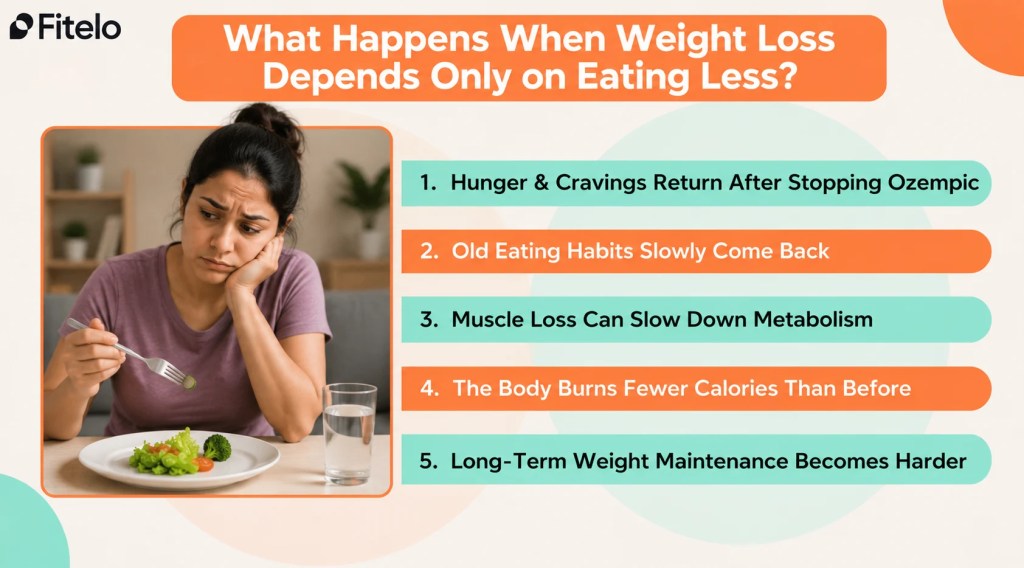
First, appetite suppression decreases. Hunger and cravings gradually return, making calorie control harder than it felt during treatment.
Second, many people never fully develop sustainable eating patterns while taking the medication. Since the drug is reducing appetite automatically, portion control may happen without learning:
- Meal balance
- Protein prioritization
- Craving management
- Long-term eating structure
So when the medication is removed, old patterns often return too.
But there’s another important issue: The body may now require fewer calories than before.
If muscle loss occurred during rapid weight loss, metabolism slows down. This means maintaining the lower weight requires more effort than expected.
Research on GLP-1 medications has shown that many individuals regain a large percentage of lost weight after discontinuing treatment. This does not mean the medication failed. It simply shows that long-term maintenance requires more than temporary appetite suppression.
This is why experts increasingly recommend combining medication with:
- Structured nutrition
- Resistance training
- Behavioral support
- Sustainable lifestyle habits
Because lasting results depend on what happens after the medication phase—not just during it. At Fitelo, we focus on long-term habit building so your body can maintain results naturally, even after the weight loss phase is over.
So, What’s the Right Way to Approach Ozempic Weight Loss?
Ozempic is not “bad,” and for many people, it can genuinely help improve weight-related health conditions.
For individuals struggling with obesity, insulin resistance, or severe overeating, medications like Ozempic may provide the support needed to finally begin losing weight.
But problems usually start when people view it as a complete replacement for nutrition and lifestyle.
Because medication can help reduce hunger, but it cannot:
That still requires structure. This includes:
- Prioritizing protein intake
- Following balanced meal patterns
- Strength training regularly
- Improving sleep and activity levels
- Learning long-term portion awareness
When these foundations are built during weight loss, the chances of maintaining results improve significantly. Because ultimately, the goal is not just temporary weight reduction.
Fitelo combines personalized nutrition, habit coaching, and sustainable meal planning to help people lose weight in a way their body can realistically maintain.
A Word From Fitelo
Ozempic can absolutely help people lose weight. For many individuals, it reduces hunger, improves appetite control, and finally makes weight loss feel achievable.
But the bigger challenge begins after the medication is stopped.
Because long-term success depends on much more than temporary appetite suppression. Muscle preservation, metabolism, nutrition quality, eating habits, and lifestyle consistency all play a major role in whether the weight stays off or slowly returns.
That’s why sustainable weight loss cannot rely only on medication.
At Fitelo, the focus is on helping people build realistic nutrition and lifestyle habits that support healthy fat loss while protecting metabolism and muscle health.
Because the most successful weight loss journeys are not just about losing weight quickly, they’re about creating results the body can maintain long-term.
Frequently Asked Questions
What Happens When You Stop Ozempic?
After stopping Ozempic, appetite and cravings often gradually return. Many people may find calorie control harder without the medication’s appetite-suppressing effects.
Do People Regain Weight After Stopping Ozempic?
Yes. Research shows many individuals regain a significant portion of lost weight after discontinuing GLP-1 medications, especially without long-term lifestyle changes.
Can Ozempic Slow Metabolism?
Indirectly, yes. Rapid weight loss may lead to muscle loss, and losing muscle can reduce metabolic rate over time.
Why Is Muscle Preservation Important During Weight Loss?
Muscle helps support metabolism and long-term weight maintenance. Preserving lean muscle mass makes it easier to maintain results later.
How Can Weight Regain Be Prevented After Ozempic?
Sustainable nutrition, adequate protein intake, strength training, and long-term lifestyle habits can help improve long-term weight maintenance.