

Ten years ago, grabbing a snack usually meant walking to the kitchen. Today, it takes just a few taps on a phone.
Food is everywhere. It’s on our screens, in advertisements, delivered to our doors within minutes, and engineered to be more tempting than ever before. At the same time, modern life has become more stressful, more sedentary, and more sleep-deprived.
As a result, many people feel like they’re constantly battling cravings.
If you’ve ever wondered why saying “no” to sweets, chips, desserts, or late-night snacks feels harder than it used to, you’re not imagining it. Research shows that modern food environments, ultra-processed foods, chronic stress, and disrupted sleep patterns can all increase cravings and affect appetite regulation.
The surprising truth is that cravings today are often driven by biology, environment, and lifestyle, not simply a lack of willpower.
Understanding what’s changed over the last decade can help you take back control and make weight loss feel much easier and more sustainable.
Is Modern Food Designed to Keep You Craving More?
Walk through any supermarket today and compare it to one from 10–15 years ago. You’ll notice one major difference: the explosion of ultra-processed foods.
Many modern packaged foods are carefully designed to hit what food scientists call the “bliss point”—the perfect combination of sugar, fat, salt, and texture that makes foods extremely rewarding to eat.
Research has found that ultra-processed foods now contribute more than 50% of calorie intake in several developed countries. These foods stimulate dopamine, the brain’s reward chemical, making us want more even when we’re physically full.
Unlike traditional homemade meals, highly processed foods are:
- Easier to overeat
- Digested quickly
- Less filling per calorie
- More likely to trigger repeat cravings
Another major change is food availability. Ten years ago, cravings often required effort. Today, food delivery apps provide access to thousands of high-calorie options within minutes.
The result? The brain receives more food cues than ever before, making cravings feel constant.
Cravings become easier to manage when meals are built around protein, fiber, and balanced nutrition. Fitelo’s nutrition experts help create sustainable eating plans that reduce cravings naturally instead of relying on willpower alone.
Could Your Smartphone Be Feeding Your Cravings?
Most people blame food for cravings. Few realize their phone may be contributing too.
Every day, the average person is exposed to hundreds of food-related images through social media, advertisements, videos, and influencer content. Studies show that simply seeing images of highly palatable foods can activate reward pathways in the brain and increase appetite.
Think about it:
- Dessert reels while scrolling Instagram
- Food delivery notifications
- Restaurant advertisements
- Viral food videos
- Influencer food content
These constant visual triggers create what researchers call “hedonic hunger”, the desire to eat for pleasure rather than physical need.
Ten years ago, people weren’t exposed to food marketing every few minutes. Today, cravings can begin before hunger even appears.
Researchers have found that repeated exposure to food cues increases food-related thoughts, snack consumption, and impulsive eating behaviors.
This creates a cycle where people feel hungry more often, even when their bodies have enough energy.
The challenge isn’t lack of discipline. It’s that the brain is constantly being reminded to eat.
Learning how to separate true hunger from triggered cravings is a skill. Fitelo helps members build healthier eating habits that work in today’s food environment, not against it.
Has Modern Stress Rewired the Way We Eat?
One of the biggest differences between today and a decade ago is the amount of chronic stress people experience.
Long work hours, financial pressure, digital overload, social comparison, and constant connectivity have created a lifestyle where many people rarely switch off.
This matters because stress directly affects appetite.
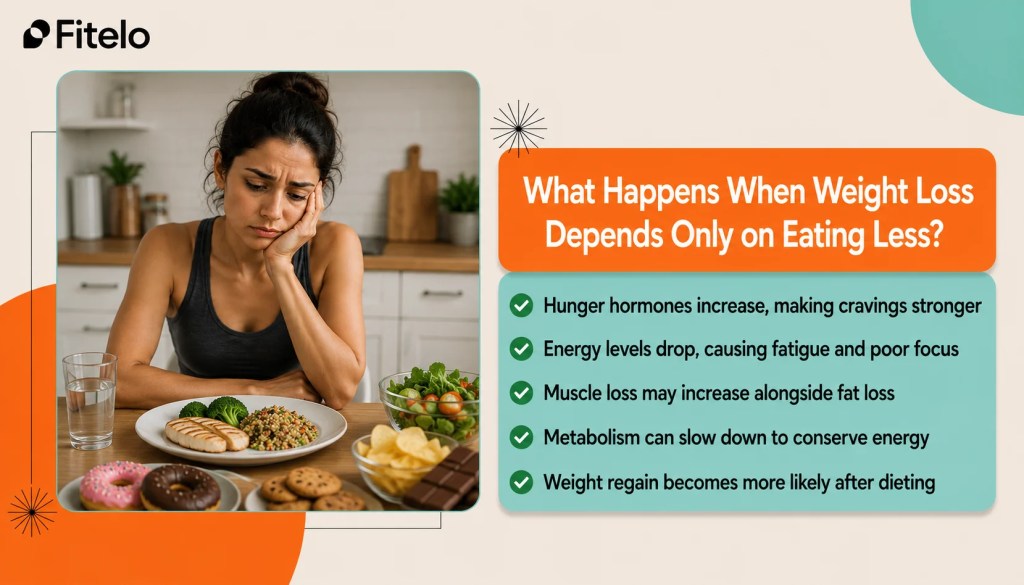
When stress levels rise, the body releases cortisol. Higher cortisol levels can:
- Increase appetite
- Intensify sugar cravings
- Promote emotional eating
- Encourage comfort-food consumption
- Make portion control harder
Research consistently shows that people under chronic stress consume more calorie-dense foods than those experiencing lower stress levels.
The reason is biological.
High-sugar and high-fat foods temporarily activate reward pathways that help the brain feel better in stressful moments. Unfortunately, the relief is short-lived, leading to repeated cravings later.
This is why many people notice cravings becoming strongest:
- After work
- During emotional situations
- During periods of poor sleep
- While feeling overwhelmed
What feels like a lack of self-control is often the body’s attempt to cope with stress.
Weight loss becomes easier when stress, nutrition, and lifestyle are addressed together. Fitelo’s experts focus on building sustainable habits that support both physical and mental well-being.
Are Poor Sleep and Busy Lifestyles Quietly Increasing Hunger?
A decade ago, people weren’t necessarily sleeping perfectly, but today’s lifestyle often makes quality sleep even harder.
Late-night screen time, irregular work schedules, binge-watching, and constant notifications have contributed to widespread sleep deprivation.
The impact on cravings is powerful.
Research shows that even one night of poor sleep can:
- Increase ghrelin (the hunger hormone)
- Decrease leptin (the fullness hormone)
- Increase appetite the next day
- Raise cravings for sugary foods
- Reduce self-control around food choices
Some studies suggest sleep deprivation can increase cravings for calorie-dense foods by up to 20–30%.
At the same time, busy lifestyles have reduced meal quality.
Many people now:
- Skip breakfast
- Eat meals on the go
- Rely on packaged snacks
- Consume less fiber
- Eat less protein
These habits create blood sugar fluctuations that can intensify cravings throughout the day.
When poor sleep combines with poor nutrition, the body constantly searches for quick energy, often in the form of sugar and highly processed foods.
This creates the perfect environment for persistent cravings and weight-loss struggles.
Instead of chasing quick fixes, Fitelo helps you build a routine that supports better sleep, balanced nutrition, and long-term appetite control, three factors that can dramatically reduce daily cravings.
A Word From Fitelo
If food cravings feel stronger today than they did years ago, it’s not just your imagination.
Modern food is more processed, food marketing is more aggressive, stress levels are higher, and sleep quality has declined for many people. Together, these changes create an environment where cravings are constantly being triggered.
The encouraging news is that cravings are not permanent. Once you understand what’s driving them, you can start making changes that support your biology rather than fight against it.
Better sleep, balanced meals, higher protein intake, stress management, and healthier eating habits can all help reduce cravings naturally.
Weight loss becomes much easier when you’re no longer spending every day battling food urges. The goal isn’t perfect discipline, it’s creating a lifestyle where healthy choices feel easier and more sustainable.
Frequently Asked Questions
Why Do Food Cravings Feel Stronger Now Than Before?
Modern lifestyles expose us to more processed foods, food advertisements, stress, and sleep disruption than ever before. These factors can increase appetite signals and make cravings feel more frequent and intense.
Are Food Cravings Caused By Lack Of Willpower?
Not usually. Cravings are influenced by hormones, brain reward pathways, stress levels, sleep quality, and food choices. Biology often plays a bigger role than most people realize.
Can Poor Sleep Increase Sugar Cravings?
Yes. Poor sleep increases hunger hormones and reduces fullness signals, making people more likely to crave sugary, high-calorie foods the following day.
Why Are Processed Foods Harder To Resist?
Ultra-processed foods are designed to be highly rewarding by combining sugar, fat, salt, and texture. This can stimulate dopamine release and encourage repeated eating.
How Can I Naturally Reduce Food Cravings?
Eating more protein and fiber, improving sleep quality, managing stress, staying hydrated, and following a balanced meal routine can help reduce cravings and improve appetite control naturally.


Join the conversation
No comments yet — be the first to share your thoughts.